
Carrot, tomato, chickpea, and feta bake


HOW TO ROASTED CARROT AND FETA BAKE
INGREDIENTS
- 2 blocks of feta cheese (depends on how cheesy you want the final combination)
- 1 can of chickpeas, drained and rinsed
- 4-5 medium carrots, chopped
- 1 large red onion, sliced
- 15 baby tomatoes
- Minced garlic (either freshly minced or from a bottle)
- Salt, pepper, and any seasoning you like (e.g. thyme, rosemary, mixed Italian herbs)
STEP BY STEP
- Preheat the oven to 400F, prep a large baking sheet for roasting (line with foil and get it nice and oily) and have a good size casserole dish ready to mix everything in once it's all cooked.Sardine salad: how to love these little fishies

I grew up eating "sardines on toast" - something I now understand isn't a common kid meal. Then again, I also ate marmite on toast, anchovy spread on toast, avo on toast, and, of course, baked beans on toast. What can I say? It was the 70s in the South Africa. Anyway, the way my mother turned a can of sardines into a favorite meal was to finely chop tomatoes and onions and then mix those into the sardines along with vinegar. It was DELICIOUS! This salad is really just me amping up the fiber in my mom's toast topping and calling it salad.
Unless you've been living under a rock, you've probably heard that these little fishies are crazy good for you. Here are just some of the health benefits of sardines:
- One can of sardines (approximately 3.75 oz.) provides 24.6 grams of protein. That's a big protein punch for a little can. Sardines are also rich in calcium (382 grams) and vitamin D. Full nutritional breakdown here.
- Sardines are an excellent source of marine Omega-3 fatty acids (DHA and EPA), a major player in reducing the risk of heart disease. DHA and EPA are also anti-inflammatories, can improve depression, are great for your skin, and have been shown to improve cognitive function.
- Sardines are a great source of vitamins and minerals like B1, B3, and Phosphorus, and the antioxidant Selenium.
- A study has shown that another health benefit of adding sardines to your diet is a reduced risk of diabetes. Starting from 27% of participants classified as high-risk for type 2 diabetes, this number reduced to only 8% by the end of the study.
But. A lot of people really don't like sardines; I don't like them straight out of the can either! But I love them when onions and vinegar are involved, so perhaps this salad will help make them more palatable to you.
And it's gets a great score from ZOE (read my whole ZOE story here):

This salad is super quick to make - it really depends on how much chopping you want to do. Onions, tomatoes and celery are the primary ingredients.
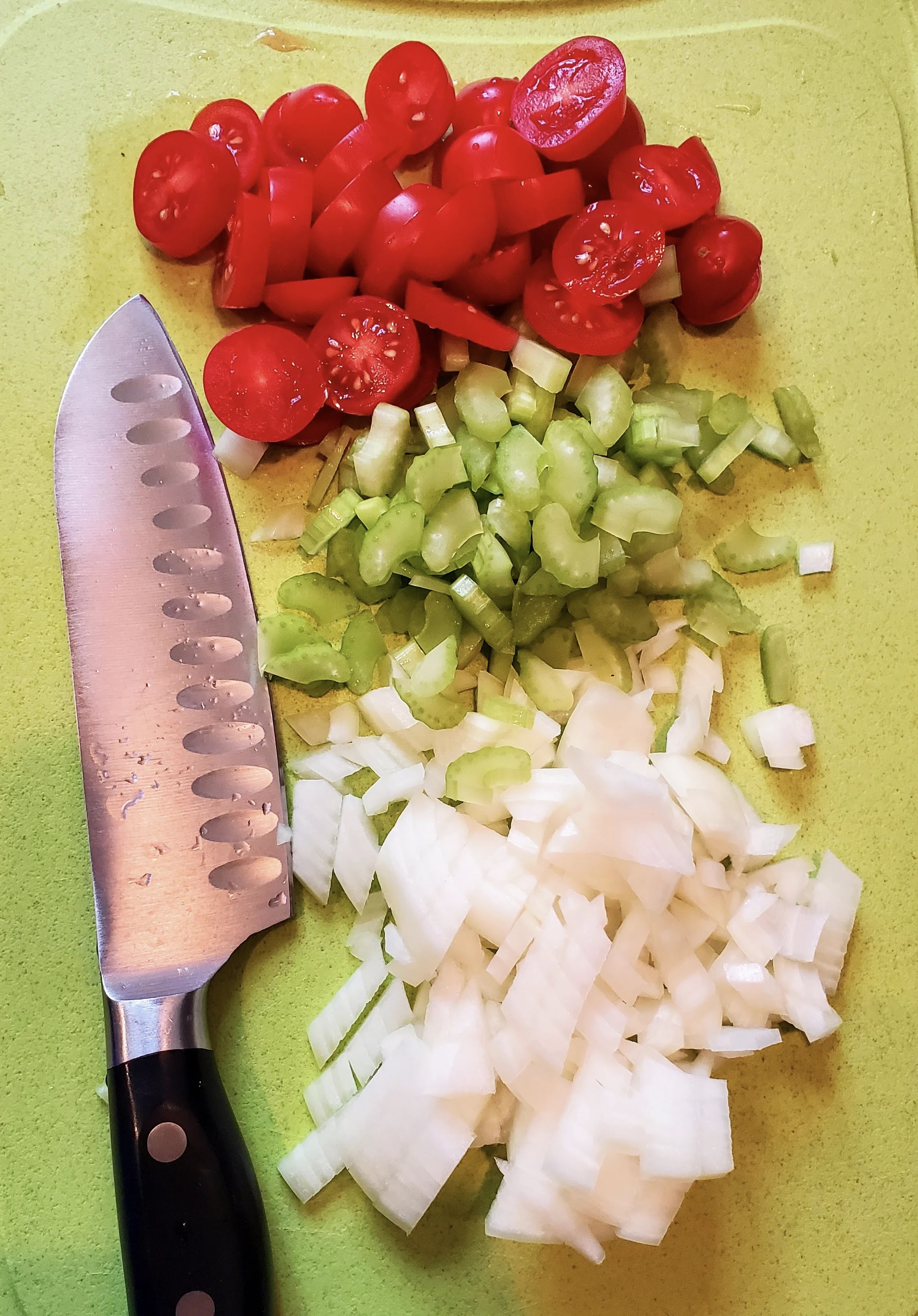

HOW TO MAKE SARDINE SALAD
INGREDIENTS
- 2 cans of sardines
- 1 rib of celery, minced
- 1 small red/white onion or 3 green/spring onions (adjust this based on how much you like raw onion)
- 6 grape tomatoes or one large tomato, chopped
- Approx 1 tablespoon of vinegar (apple cider, white balsamic... whatever you like)
- Extra olive oil to taste
- 4+ cups of your favorite salad greens
- Salt and black pepper to taste (and a bit of turmeric if you want to add more of an anti-inflammatory punch)
- If you want to “spice up” the anti-inflammatory defense, add a little bit of turmeric and black pepper when you are preparing your sardines. The combination is critical: the piperine in black pepper inhibits your liver to make sure your body maximizes all the curcumin in the turmeric.
- Chop up sun-dried tomatoes into the mix - they pair beautifully with sardines
- If you like capers, you'll love them combined with sardines
- Throw in 2 large springs of fresh basil, especially if you're adding sun-dried tomatoes
- Make the whole thing *really* tomato-y by adding a tiny bit of tomato paste
- Raw garlic is always an option if you're a fan!
STEP BY STEP
- Use a fork to mash the sardines in a bowl. Add all the chopped veggies and stir. Then add vinegar, oil, salt, and pepper and combine well. If you can, get this 1-3 hours before you plan to eat it - this gives the onions time to mellow and the flavors time to mix.
- Divide the greens between two plates and top each portion with sardine mix. If you're making this just for you, the other half will store well in the fridge for a few days.
How to eat pasta when your blood glucose control is poor


And that's how to have your pasta and eat it too. Or something.
Pro tip from The Glucose Goddess
Powerfood salads and the best way to eat them

What are powerfoods?
Disclosure: Some of the links on this page are affiliate links. This means that, at zero cost to you, I will earn an affiliate commission if you click through the link and finalize a purchase.
I'm going to mention them regularly because they tend to be plants and a tummy full of plants is a happy tummy. And any ZOE member is challenged to hit a plant goal every day! Why? First, plants are your best go-to for fiber and fiber promotes a healthy gut microbiome. It promotes regular bowel movements too, obvi, but the contribution it makes to boosting the good bugs in your gut is relatively new news. And it's all about the power of phytochemicals. If you want all the science, go here, or pick up Fiber Fueled, or listen to this edition of the ZOE Science and Nutrition podcast.
The other amazing thing that makes plants so powerful? They provide an extraordinary nutritional bang per ounce. And the less time that passes between picking them and eating them, the more power they can share. This means you should think seriously about growing a few of your own edible leaves, sprouts, or microgreens. And when you shop at the farmer's market, plan on eating lots of that produce the same day you buy it! Your body will thank you.
What's makes this salad powerful?
When we think about superfoods, things like broccoli and blueberries come to mind, not salad greens. But I'm here to tell you, EAT YOUR LEAVES. As I go through what makes such "basic" salad ingredients so special, I'm leaning on two books: Life Changing Foods and Power Foods.
Let's start with all the different leaves: spring mix and arugula (from the grocery store), a few kale leaves from my hydroponic garden (see below), and a handful of microgreens. These are often thought of as nothing more than the boring base of a salad, but they're actually vegetable royalty! Leafy greens are practically predigested so they don't require much from your digestive system and they immediately get to work scrubbing and massaging your stomach lining, small intestine and colon, loosening old trapped yeast, mold, and other types of fungus and pockets of waste matter. If eating lettuce upsets you, start with small quantities of butter leaf or red leaf lettuce until you build up a tolerance. Leafy greens also help create a more alkaline stomach composition and general alkalinity in other body systems, especially the lymphatic system. This matters because the lymphatic system can become the most acidic of all thanks to the barrage of chemicals, acids, plastics, pesticides, and pathogens constantly entering it. Leafy greens help drain the lymphatic system of these toxins.
They hold vital mineral salts and trace amounts of bioavailable iodine, chromium, sulfur, magnesium, calcium, chromium, sulfur, manganese, and molybdenum, which are critical for neurotransmitter and neuron support. Leafy greens are high in enzymes too as well as vitamin A, B, healing alkaloids, and forms of chlorophyll and carotenes. This unique group of nutrients works together to feed all organs and body systems. Oh, and believe it or not: Leafy greens contain the most bioavailable and assimilable proteins you can find. So the next time you find yourself picking all the "good" stuff out of a salad and leaving the boring leaves, remember what you just read! Your body will thank you for eating your greens.
A separate note on microgreens: what's the point? Well, take everything said above about grown-up greens and multiply it for these babies. They pack even more of a phytochemical punch than the veggies they'll become (hello broccoli greens) but require a fraction of the processing to assimilate their powers. Oh, and they're easy to grow at home so you can cut them and eat them immediately.
Green onions: Any kind of onion (leeks, chives, scallions, red onions, shallots etc) is a natural antibacterial. To really benefit from onion's qualities, we need to eat them more often! Some people feel uncomfortable after eating onions but, contrary to popular belief, they are not irritants. An upset tummy from onions is an indication that you likely have an elevated level of unproductive bacteria in your gut. Onions work to eliminate that bacteria and the resulting die-off can result in temporary discomfort. Onions are one of the most accomplished foods on the planet for keeping down bacterial overgrowth in the body. Onions are also high in trace minerals zinc, manganese, iodine, and selenium so they can help rejuvenate the skin and protect your lungs (helpful for addressing colds and flus). They're also the ultimate anti-inflammatories for the bowels.
Avocados: Avos have been called "the mother fruit" and "the soul of all other foods" because an avo is the closest food on the planet to breast milk. Maybe that's why babies love them when they're offered them as early solids? Avocado is at the top of my gut-boosting food list from ZOE. Why? It contains phytochemicals called isothiocaynates - they're responsible for the color of the yellow-green flesh and help restore stomach and intestinal linings. Avocados are amazing for your brain too! A healthy source of omega-6 fatty acids, they can help restore the central nervous system and ward off dementia. They also have an anti-aging effect on your skin, reducing dryness and contributing to the disappearance of dark under-eye circles.
Pepitas / pumpkin seeds: Just a handful of these seeds offers a concentrated source of protein and energy-producing magnesium, along with generous amounts of immunity-boosting zinc. Abundant in phytosterols, which help lower cholesterol, pumpkin seeds also provide lots of fiber when eaten in their shells. So next Halloween, keep all those seeds you scoop out and roast them with salt and garlic powder.
So much for a "simple" salad eh?

What's the best way to eat salad?

Butternut and chickpea salad with tahini sauce


Let's get into the making of it. You're going to start by roasting butternut. I don't know why, but I find that when butternut is served in restaurants in the US, it's always undercooked. Roasted butternut pieces should have the same consistency as roasted sweet potato pieces: firm enough to keep their shape, but soft inside.


HOW TO MAKE BUTTERNUT AND CHICKPEA SALAD
INGREDIENTS
For the salad:- 1 medium butternut squash (about 2 to 2 1/2 lbs), peeled, seeded and cut into 1 1/2 inch pieces
- 1 medium garlic clove, pressed
- 1/2 tsp of ground allspice (or whatever spices you like on roasted butternut)
- 2 Tbsp olive oil
- Salt
- 1 15-ounce can of chickpeas, drained and rinsed
- 1/4 of a medium red onion, finely chopped
- 1/4 cup of coarsely chopped cilantro leaves
- 1 medium garlic clove, finely minced with a pinch of salt
- 3 1/2 Tbsp of lemon juice
- 3 Tbsp of well-stirred tahini
- 2 Tbsp of water
- 2 Tbsp of olive oil (or more, to taste)
INSTRUCTIONS
- Preheat the oven to 425 degrees F (about 220 C)
How to avocado toast... so many ways

I think the cliche is to blame Millennials for making avocado toast trendy. But I grew up in South Africa is the 70s/80s and "avo on toast" was a regular weekend lunch (along with baked beans on toast). So if Millennials are to blame for making this delicious meal easily available in restaurants, hats off to them.
This humble meal packs a nutrient punch and avocado is one of ZOE's recommended gut-healing foods. So I eat it often and so should you! Here are some ideas for mixing things up - variety matters. What's ZOE? Learn more here.

First, I generally use the grain-free, nut and seed bread that I make myself. But in a pinch, I like this imported bread by Delba and it gets top marks from ZOE:

Since this combination gets such a high score, it's a great meal to play with a little. What do I mean? Well, if you're craving something crunchy (see my post on incorporating packaged snacks) add a small portion. They hardly skew the score:

It's one of the great things about eating this way - you quickly start to see the power of combining foods the right now. Eating a bag of parmesan chips would be hard on your body and I don't recommend that. Adding a handful to this meal though? It satisfies your need to eat these kinds of snacks and keeps the experience from feeling like a "diet" of some sort. It's not.

I LOVE adding green onions too, because they're so good for you. And let's face it: anything that's used as an ingredient in Guacamole is a no-brainer addition to your avocado toast.

Add grilled or fried mushroom and BOOM - this is such a yummy, filling meal that is now restaurant quality. Oh, and ZOE agrees:
